
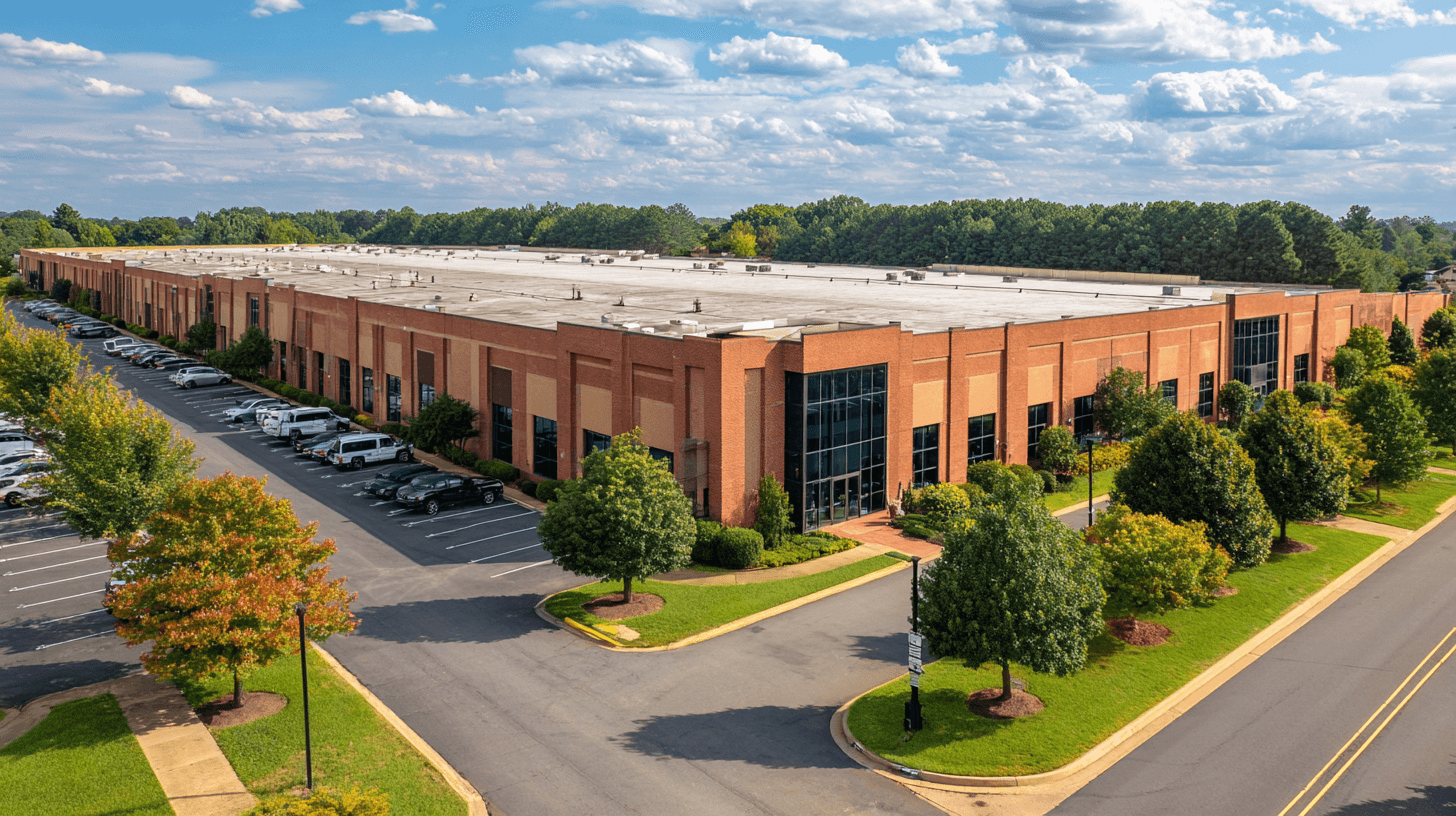
The Research Triangle’s commercial real estate landscape has shifted sharply in recent years. Office markets, especially high-end Class-A space, face historically high vacancy – roughly one‐fifth of all office square footage in the Triangle is empty1 (direct vacancy ~16–18% in 20252, which rises above 20% when subleases are included3). In contrast, demand for industrial and flex properties – particularly “last-mile” warehouses – remains robust. Major tenants in e-commerce, biotech, and advanced manufacturing are fueling very low vacancy and rising rents for modern industrial space. For example, the Raleigh‐Durham warehouse/flex vacancy has stayed in the single digits (around 6–8% in recent quarters45), even as new product delivers quickly. Rents and sale prices for industrial buildings are rising on strong demand: nearly 20% of the current industrial construction pipeline was pre‐leased in mid-20256, and recent sale prices for large warehouse facilities are in the $148–$182/SF range7, reflecting strong investor appetite.
Cary–Morrisville office markets are struggling: Class-A vacancy was ~18% in 20258 (22%+ including sublease3). Tenants increasingly seek move-in-ready space, leaving many older office buildings dark or underused. By contrast, major distribution corridors in Cary and Morrisville (e.g. around NC Hwy 54 and Airport Blvd) are experiencing very tight industrial conditions.
Office Market Lagging, Industrial Driving Growth
Vacancy and Absorption: The Triangle’s Class-A office vacancy has climbed to historic levels. CBRE data shows nearly 20% of Triangle offices sat vacant in mid-20241. Local market reports find direct Class-A vacancy around 17–18% in 20258 (compared to low‐single‐digit industrial vacancy4). Office leasing has improved slightly, but mostly as existing tenants renew at smaller footprints9. Meanwhile, industrial/flex spaces across Wake County report virtually full occupancy. Colliers (Q2 2025) notes direct industrial vacancy at only ~5.1% in core submarkets, with 4.1% in the RTP/I-40 corridor4. Net absorption tells the story: in Q3 2025 the industrial market added over 1.1 million SF of occupied space5, whereas office posted only 102,000 SF positive absorption10.
Rents and Valuations: With demand far outpacing supply, industrial rents and sale prices are rising. Warehouse asking rents average about $9.90/SF (NNN)11 – well below office rates ($30–36/SF for Class A12), but with historically tight vacancy these industrial rates are increasing rapidly. Flex spaces (used for light manufacturing or logistics) have averaged around $19.82/SF13. In investment sales, large suburban warehouses have fetched roughly $150–$190/SF recently7, whereas office transactions vary widely (from low rents value to high-density downtown leases). For comparison, a 251,000 SF Class-A office building traded around $286/SF (and a smaller, prime office sold at $638/SF in 2025)14, but these deals are exceptions. Overall, industrial cap rates have compressed (reflecting value) relative to stressed office assets.
Cary–Morrisville Corridor: Last-Mile Hotspots
The corridor between Cary and Morrisville – including the Hwy 54/RTP area and Airport Boulevard/NC-55 – is a strategic “last-mile” zone. These areas offer freeway access (I-40, I-540, Hwy 55, and Hwy 54) and proximity to the fast-growing suburban population centers. E-commerce and logistics firms prize these locations for same-day delivery; biotech and medical manufacturing firms also locate here for lab/manufacturing space near RTP’s life sciences hub. For example, Wake County economic planners highlight new industrial parks and Burlington-based biotech projects around Airport Blvd and Davis Dr. Investment in Life Sciences is booming (Biogen’s $2B RTP facility, plus recent announcements by Coriolis Pharma in Morrisville15). Meanwhile, major last-mile users like Amazon and FedEx are expanding local delivery and sorting centers (Amazon is adding delivery stations near Garner and Raleigh16, and Flowspace operates a Cary fulfillment center for e-commerce).
The local zoning and infrastructure favor industrial use: Highway 54 and Airport Blvd connect directly to RDU airport and major highways, making freight movement efficient. As one market analyst notes, population growth “will continue to drive a need to move commodities to consumers – and I-540 is making new locations accessible to roads for e-commerce growth”17. In practice, this means older mid‐town flex/warehouse buildings (20–40 years old) in Cary/Morrisville are now in highest demand. Tenants (especially medical and tech companies needing clean‐room or lab space) are willing to pay premiums for well-located, well-serviced industrial buildings, even when older. As a result, property values for these industrial assets have surged relative to traditional offices.
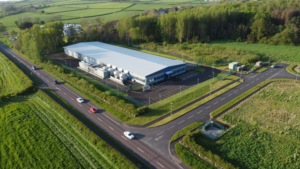
Industrial demand is surging. Modern warehouses and flex spaces (often 1–50+ acre parks off Hwy 54/Airport Blvd) are near full-occupancy. E-commerce and life-science tenants drive competition for space. By contrast, many high-end office parks sit largely empty (in the background). The Cary/Morrisville area now sees more demand per square foot in the industrial category.
Why Property Owners Should Consider Selling Now
Property owners in Cary or Morrisville with aging warehouse or flex buildings are facing a rare opportunity. The “flight-to-quality” has left older offices and labs largely vacant, but those same market shifts have pushed industrial values to near-peak levels. Sellers can “cash out” at high valuations before any interest-rate or construction-cost chill arrives. For example, a portfolio of Triangle industrial parks sold for $554.9 million in 2025 at 94% occupancy18, underscoring investor appetite. By contrast, distressed office trades now require heavy cap-ex or long lease-ups. Current sellers of flex space (suburban, small-tenant-heavy) are seeing offers at substantial per-SF rates because buyers are vying for the limited industrial inventory.
From an SEO perspective: owners searching for terms like “industrial flex space Raleigh”, “last-mile industrial Cary”, “warehouse sale Triangle NC”, or “commercial property acquisition Morrisville” will find that market trends point toward industrial strength. Given that Class-A office vacancy is well above 20% (combined)119 and showing signs of only slow recovery, the best time to sell an older industrial asset is now.
If your property fits this profile, it may be time to talk with a specialist. Is your property a candidate for a direct industrial acquisition? Contact our commercial wing – we have decades of Triangle market experience and can provide a tailored valuation.
| Metric | Class-A Office (Triangle) | Industrial/Flex (Triangle) |
|---|---|---|
| Vacancy Rate (direct) | ~16–18% (Q3 2025)2 (Class A ~18.06%8) | ~6.4% (warehouse)4; flex ~16% (Q3 2025)20 |
| Total Vacancy (incl. sublease) | ~21% (22.3% in Q2 2025)213 | <7% (sublease minimal)4 |
| Avg. Asking Rent (NNN) | ~$36.15/SF (Class A)12 | ~$9.90/SF (warehouse)11; $19.82/SF (flex)13 |
| Recent Sale Prices ($/SF) | $286 (251K SF office) up to $638 (smaller office)14 | $148–$182 (large warehouses)7; $196–$244 (flex)22 |
| Q3 2025 Net Absorption | +102,000 SF (office)10 | +1,169,000 SF (warehouse)5; –14,000 SF (flex)20 |
| Market Momentum | Soft – stalled leasing, declining occupier demand23 | Strong – positive absorption, new supply leasing out4 |
These data illustrate the divergence: industrial/flex properties are leasing and selling quickly at higher prices, while office space languishes. Local firms in Cary/Morrisville report leasing activity concentrated in logistics and manufacturing uses, whereas office developers are largely on hold1723.
In summary: The current environment favors sellers of industrial and flex buildings. Last-mile industrial assets in Cary–Morrisville command premium valuations thanks to e-commerce and med-tech demand, while Class-A offices struggle with excess vacancy. If you own an older warehouse or flex building in the Triangle, now is an opportune time to consider a sale. Is your property a candidate for a direct industrial acquisition? Contact our commercial wing – we can help you capitalize on these strong market conditions.
Sources: Local commercial real estate market reports and news (CBRE, Colliers, Axios, WRAL TechWire, Tri Properties)142177. These highlight Triangle office vacancy (~20% and rising) versus industrial vacancy (~6–8%) and transactions in 2024–2025. Charts and figures are drawn from the cited research data.
[1] [9] Office vacancy expected to bottom out in the Triangle in 2025 – Axios Raleigh
https://www.axios.com/local/raleigh/2024/07/15/office-vacancies-triangle-remote-work
[2] [3] [5] [7] [8] [10] [11] [12] [13] [14] [19] [20] [22] [23] triprop.com
https://www.triprop.com/wp-content/uploads/3Q25-Triangle-Market-Report.pdf
[4] [6] Raleigh-Durham Industrial Report | 2025 Q2 | Colliers
https://www.colliers.com/en/research/raleigh/raleigh-durham-industrial-report-2025-q2
[15] Coriolis Pharma announces plans to invest $10 million, creating 50 …
[16] Amazon to open 2 new delivery stations in North Carolina | AP News
https://apnews.com/general-news-9c9eaaf192e14a35e27f6fcabcc2eeb3
[17] 2022 Triangle Market Overview and 2023 Forecast: WAREHOUSE – Tri Properties
https://www.triprop.com/2022-triangle-market-overview-and-2023-forecast-warehouse-2/
https://www.triprop.com/wp-content/uploads/2Q25-Triangle-Market-Report.pdf
[24] Office vacancy rates creep higher but positive signs emerge for Triangle market | WRAL TechWire